


Sage's Path: Convergence
Gwillz Limited
Sage's Path: Convergence is an adventure game built around a simple but appealing idea: the direction of a ninja world should depend on the choices you make. I approached it expecting a compact mobile experience rather than a huge console-style production, and that is the right mindset for it. The game is free to start, aimed at Everyone, and developed by Gwillz Limited. Its store summary presents the player as the person shaping the future of the ninja world, but the real question is whether that promise feels meaningful during ordinary play.
My overall impression is mixed but interested. There is a clear identity here, and the ninja setting gives the game more personality than a generic adventure title. At the same time, the early version feels like a work in progress, so I would not recommend it blindly to someone looking for a polished, content-heavy experience. I would recommend trying it if you enjoy discovering smaller mobile games, making decisions at your own pace, and judging a title by its potential as much as by its current finish.
What the current version tells me about the experience
The version I reviewed is 0.0.2, which matters when deciding how much patience to bring. That version label suggests an early stage, and the game is easier to appreciate when I treat it as an evolving adventure rather than a fully established blockbuster. The Android requirement is modest, with support beginning at version 6.0, so compatibility should not be a major obstacle for many older devices.
Its category is adventure, but the ninja theme gives that label a particular flavor. I expected the focus to be less about simply moving from one fight to another and more about the feeling of guiding a larger story. That framing is important because players who want immediate, highly technical combat may find the experience less satisfying than fans who enjoy atmosphere, choices, and gradual progress.
The game has already passed 100K installs and holds a 3.2 average from around 1K ratings. Those figures suggest that it has attracted genuine curiosity, while also showing that the reception is not universally enthusiastic. I read that middle-ground response as a useful warning: there is enough here to draw players in, but not enough polish or consistency for me to call it an automatic recommendation.
Related News






In everyday use, I can see myself opening it during a short break, playing through a small portion of the current adventure, and putting it down without needing a long uninterrupted session. That makes it more approachable than an adventure game that demands a large time commitment every time it is opened. The trade-off is that a shorter session can make progress feel less dramatic if the game does not give each decision enough weight.
How I would approach the opening hours
I would not rush through the first encounters simply to reach the next unlock. In a game that puts the future of its world in the player’s hands, the useful test is whether the choices feel connected to consequences. I would pay attention to how the game explains decisions, whether it lets me understand the risks before committing, and whether different approaches create noticeably different outcomes.
That approach also helps with the early-version uncertainty. If I treat every moment as a race toward an imagined endgame, small rough edges become irritating. If I instead examine how the game establishes its world and decision-making, I get a clearer sense of whether its foundation is strong. My practical tip is to play in several short sessions before deciding whether it deserves a permanent place on your phone.
Gallery
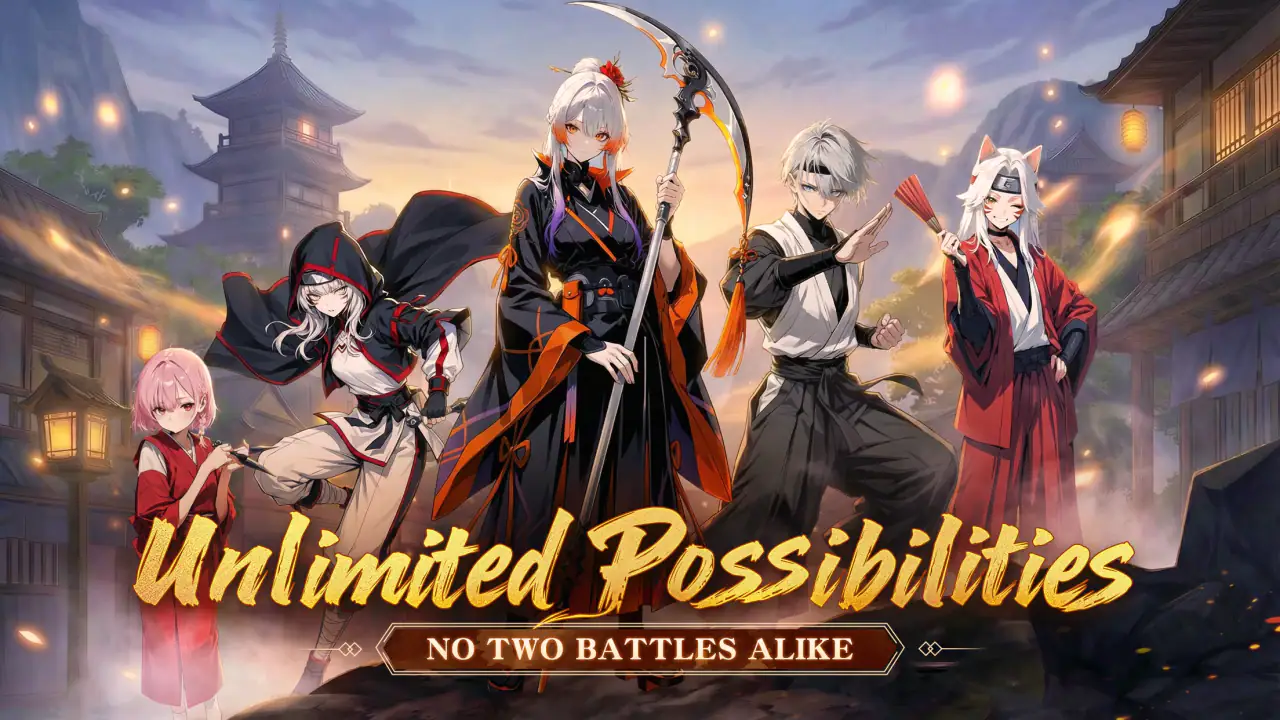
Another useful habit is to avoid spending immediately. The game is free, and the available in-app purchases range from $0.99 to $99.99 per item. That is a wide span, so I would first learn what progress feels like without paying. A purchase is easier to judge after I know whether it removes a genuine annoyance or simply accelerates a system I have not yet understood.
Progress, pressure, and the cost of impatience
Free-to-play adventure games often create tension between enjoying the journey and wanting to move faster. Sage's Path: Convergence is best judged through that tension. If the normal pace feels rewarding, optional spending can remain optional in a meaningful way. If the game repeatedly makes ordinary progress feel slow, even a small purchase can begin to feel less like a choice and more like a response to pressure.
I would watch for three things while playing. First, does the game give me a satisfying reason to return beyond collecting another reward? Second, does a mistake teach me something, or does it mainly encourage me to spend to avoid repeating it? Third, do decisions shape the adventure, or are they mostly decorative prompts around a fixed route? These questions are more useful than judging the purchase menu by itself.
The broad purchase range makes budgeting especially important. Someone who only wants a casual experiment can simply set a personal rule: play for a while, decide whether the core loop is enjoyable, and never buy anything to solve frustration created by unfamiliar systems. Players who are comfortable spending should still identify what a purchase actually changes before confirming it. A low-cost item may be reasonable for convenience, while a high-cost item deserves much more scrutiny.
I also would not assume that paying makes the game more enjoyable. In some mobile adventures, faster progress can remove the small discoveries that make the early journey worthwhile. For this title, I would rather understand the world and its choices first. Spending before that point could make the experience shorter without making it better.
Fairness when choices and competition meet
Fairness is harder to judge than price because it depends on how the game connects progression, rewards, and other players. I would be cautious about comparing a paid player with a non-paying player until I had seen how the systems actually work. The presence of purchases alone does not prove that the game is unfair, but the large difference between the smallest and largest listed items means I would pay close attention to whether money affects meaningful progress.
If the adventure is primarily personal and story-led, spending may matter mostly as a convenience issue. In that case, the key question is whether a non-paying player can enjoy the narrative and make important choices without feeling blocked. If competitive elements become central, the standard rises: players should be able to tell whether success comes from understanding the game or from buying advantages.
My recommendation for a fair test is to begin without purchases, record how long normal progress remains comfortable, and compare that experience with the moments when the game presents paid options. I would also notice whether the game clearly explains what an item does before asking for payment. Clear information supports trust; vague value makes even a cheap purchase feel risky.
This is where the game may suit one player and disappoint another. A relaxed player who enjoys gradual discovery can tolerate a slower route. A player who wants equal footing in a competitive environment may prefer an adventure game with a clearly transparent progression model. I would not choose this title specifically for competitive fairness until I had personally confirmed that its paid systems do not dominate the experience.
What I would want clarified before committing
The early version leaves me with practical questions that affect long-term confidence. I would want to know how much of the ninja-world storyline is available in the current build, how often meaningful decisions appear, and whether choices can be revisited or permanently shape a playthrough. Those details determine whether the central idea is a real gameplay structure or mainly a theme used to frame a straightforward adventure.
I would also want a clearer sense of the long-term balance between free progress and purchases. The listed price range tells me that paid items exist, but not whether they are cosmetic, convenient, essential, or connected to competitive strength. I would therefore avoid promising myself a long-term investment based only on the concept. The sensible path is to test the free experience first and reassess after I understand the progression rhythm.
Another question concerns audience fit. The Everyone rating makes the game broadly accessible from an age-classification perspective, but that does not mean every player will enjoy its style. Younger players may need guidance around in-app purchases, especially because the available items span from a very small amount to a much larger one. Adults should also check their device’s purchase controls if the phone is shared.
The game’s release date is February 10, 2026, so I would judge it as a young product rather than comparing it unfairly with adventure games that have had years to expand. That context does not excuse frustrating design, but it does change my expectations about depth and refinement. I would be more forgiving of a limited opening than of unclear payment prompts or progress that feels intentionally uncomfortable.
Who should try it, and who should skip it
I think this game is most suitable for players who like ninja fiction, mobile adventures that can be sampled in short sessions, and stories where personal choices are supposed to influence the direction of a world. It is also a reasonable option for curious players who enjoy finding early projects before they become more established. The free entry point makes that experiment easy, provided the player is disciplined about purchases.
I would be more hesitant to recommend it to someone seeking a finished, content-rich adventure with a deeply proven progression system. Players who dislike in-app purchases on principle should also be cautious, not because every purchase is automatically harmful, but because the game includes them and the current version is still young. A player who wants a purely competitive experience may be better served by a title whose fairness rules are already widely understood.
For a realistic scenario, imagine having fifteen minutes during a commute or lunch break. I would open the game, follow one short section of the adventure, and focus on whether the decisions hold my attention rather than trying to maximize every reward. If I finish that session curious about the next consequence, the game is doing its job. If I mainly remember waiting, confusing prompts, or pressure to buy, I would move on.
Compared with a conventional action adventure, this title appears more appealing when I want a sense of direction and personal involvement than when I want constant mechanical intensity. Compared with a story-focused game, it needs to prove that its choices have enough impact to justify the ninja-world premise. That is the central trade-off: its identity is promising, but its value depends on how deeply the current build lets that identity affect play.
My trust verdict after weighing the free start and purchases
I come away cautiously positive, but not fully convinced. The game has a distinctive premise, a reachable entry point, and enough audience interest to show that it is not invisible. Gwillz Limited has created something that can appeal to players who enjoy shaping an adventure rather than merely completing a fixed sequence. Still, the modest average rating and early version make it clear that I should recommend exploration, not unconditional commitment.
My advice is simple: install it for the free experience, play long enough to understand the progression loop, and delay every purchase until you can explain exactly what it adds. That is especially important when the purchase menu stretches from $0.99 to $99.99. If the game remains enjoyable without spending and its decisions feel meaningful, a small optional purchase may be easy to justify. If progress feels uncomfortable before payment appears, I would treat that as a reason to stop rather than a reason to pay.
The fairest way to approach Sage's Path: Convergence is as a promising early adventure, not as a finished guarantee. I would recommend it to patient ninja fans and curious mobile players who are comfortable evaluating a young release on its current merits. I would skip it for now if I needed deep content, proven competitive balance, or a completely purchase-free experience. Its future may be in the player’s hands, but my trust depends on whether the game lets me enjoy that future without making my wallet feel like part of the controls.
FAQs for Sage's Path: Convergence
What is Sage's Path: Convergence?
Sage's Path: Convergence is a mobile game focused on strategic progression, exploration, and decision-making. Players follow a guided path through challenges while developing their abilities and responding to changing situations. Before downloading, keep in mind that the experience is designed for users who enjoy thoughtful gameplay and gradual advancement rather than a fast, purely action-oriented game.
How does the gameplay work in Sage's Path: Convergence?
The game combines exploration with strategic choices and progression systems. As you move forward, your decisions can influence how you approach encounters, unlock improvements, and overcome obstacles. The mechanics are generally easy to understand at the beginning, although later sections may require more planning. New players should expect to spend some time learning the best way to manage their available options.
Is Sage's Path: Convergence free to download and play?
Sage's Path: Convergence may be available as a free download, but users should check the store listing for the current pricing model in their region. Depending on the version, optional purchases, advertisements, or additional content may be included. It is worth reviewing the in-app purchase information before installing, especially if the device will be used by children or shared with other players.
Does Sage's Path: Convergence require an internet connection?
The connection requirements can depend on the platform version and the specific features being used. Some parts of the game may work offline after installation, while updates, cloud synchronization, online services, or certain optional features could require internet access. For the smoothest experience, it is recommended to launch the game while connected and download any required resources before playing away from Wi-Fi.
Which devices are compatible with Sage's Path: Convergence?
Compatibility depends on the operating system, device model, available storage, and the minimum version specified by the developer. Before downloading, check the official Google Play or App Store listing to confirm that your Android or iOS device is supported. Keeping the operating system updated and having sufficient free space can also help prevent installation problems, crashes, or performance issues.
Pros
- Thoughtful puzzles reward observation and careful planning.
- Atmospheric presentation creates a calm
- immersive experience.
- Convergence mechanics add variety beyond standard puzzle solving.
- Progression feels satisfying without relying on competitive features.
- Works well for short play sessions or relaxed evening gaming.
Cons
- Some puzzles may feel unclear without enough guidance.
- The slower pace may not appeal to players seeking constant action.
- Later challenges can become noticeably more demanding.
- Limited replay value once the main puzzles are completed.
- Certain visual effects may reduce clarity on smaller screens.


